The Energy Bridge from Batteries to Circuits: Remote Control Battery Springs
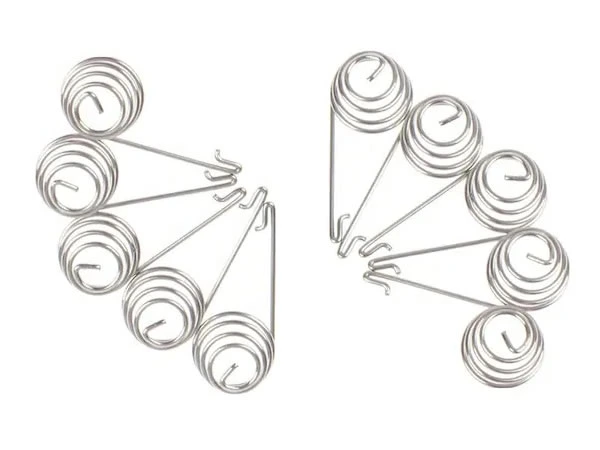
From the TV remotes we constantly use in our daily lives to the battery-powered toys that children can’t live without, there is a small yet critically important component that ensures these devices function flawlessly: remote control battery springs. Often overlooked and mistaken for a simple piece of wire, these industrial components are, in fact, the lifeline of the devices we rely on.
Not Just a Spring, but an Energy Bridge
The primary engineering function of ordinary springs is to store and release mechanical energy. However, battery springs (also known in the industry as battery compartment springs, battery contact springs, or battery pressure springs) serve a far more vital purpose. On one hand, they apply strong mechanical pressure to keep batteries firmly in place without vibration. On the other, thanks to their essential conductive structure, they transfer the energy from the battery directly to the device’s electronic circuit board. Without them, that critical energy connection between the battery and the device simply cannot exist.
Where Are They Used?
These springs are not limited to simple household devices—they are deeply integrated into many branches of industry. While they are most commonly associated with the electrical and electronics sector, they are also frequently used in automotive, home appliances, and furniture systems that include electronic components. Air conditioner remotes, flashlights, calculators, radios, and even older MP3 players—any mechanism that includes a battery compartment relies on these springs.
A Critical Role in Memory Retention
Beyond everyday use, battery springs serve an even more technical function. In devices that are not directly connected to a power outlet, a continuous energy supply is required to prevent pre-programmed or encoded data from being lost in electronic circuits. Remote control battery springs ensure that the energy stored in the batteries is smoothly transferred to these sensitive integrated components, helping preserve system memory.
Why Is Production Quality Important?
Since these springs can be manufactured in completely different shapes and sizes depending on the device and its requirements, their pricing varies based on dimensions and order quantities. However, in such technical components, there is something far more important than price: quality.
The material must be processed using advanced computer-aided machinery and comply with quality standards such as TSE. Because the quality of the spring directly determines how efficiently and powerfully electricity is conducted—and ultimately how long the device will last. (Note: At this point, it is crucial for manufacturers to use steel or special alloys with wire diameters ranging from 0.2 mm to 25 mm to ensure the most suitable strength and conductivity for each project. These specifications are based on general industry standards.)
Next time you replace the batteries in your device, take a closer look at that small spring inside the compartment. It’s not just a twisted piece of wire—it’s an invisible bridge that brings your technology to life.